
The fight against climate change inevitably involves reducing greenhouse gas emissions, but also implementing innovative solutions to capture and utilize the CO₂ already present in the atmosphere. Two complementary approaches are emerging: carbon capture and storage (CCS) and carbon capture and utilization (CCU).
To better understand these mechanisms and their role in carbon offsetting, we recommend reading the guide “Carbon Market” published by the DEE under a CC BY-SA 4.0 license.
CCS and CCU: What are the differences?
- CCS (Carbon Capture and Storage): This technology involves capturing CO₂ emitted by industries or directly from the air, and then storing it permanently in deep geological formations. The goal is to prevent CO₂ from entering the atmosphere and thereby contribute to carbon neutrality.
- CCU (Carbon Capture and Utilization): In this approach, captured CO₂ is put to use, for example by being converted into synthetic fuels, construction materials, or chemicals. This approach helps create a circular carbon economy by reusing a resource that was previously considered waste.
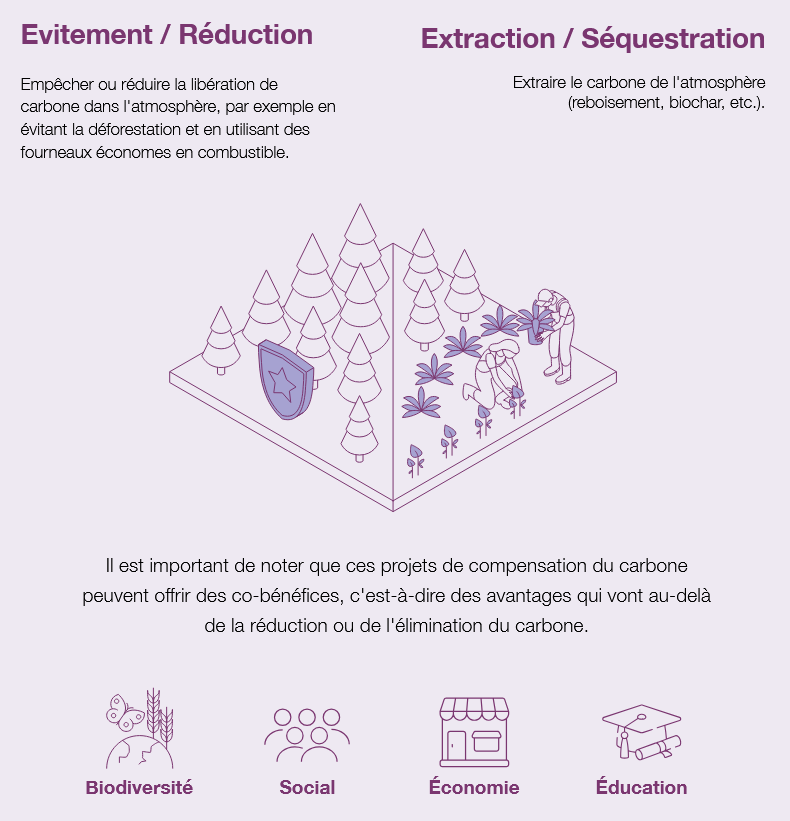
Why promote carbon offsetting?
Carbon offsetting allows companies and individuals to offset a portion of their emissions by funding projects that reduce or sequester CO₂. The DEE guide provides a detailed explanation of how carbon markets work, project quality criteria, and issues related to transparency and traceability.
A guide to making informed decisions
The DEE’s “Carbon Market” guide is an essential resource for:
- Understand the mechanisms of compensation and the differences between CCS and CCU.
- Identify best practices for selecting credible and effective projects.
- Learn about existing regulatory frameworks and certifications.
Conclusion
This content is created by the State of Geneva – Cantonal Office of Economy
and Innovation (OCEI), under a CC BY-SA 4.0 license.
Source : DEE-Guide-04-Marché carbone.pdf